
A cramped stage isn't a limitation; it's a canvas for intimacy that cavernous venues simply can't replicate. You probably feel that a modest budget or restricted rigging space means settling for a "functional" look whilst sacrificing the atmosphere of a professional theatre. Learning how to light a small stage is less about the quantity of your equipment and more about the intentionality of your design. By focusing on a few high-quality, curated fixtures, you can transform a tiny corner into a world of depth and texture.
We know that technical jargon and the fear of choosing the wrong gear can make the process feel overwhelming. This guide promises to strip away the complexity, offering a clear, actionable plan to elevate your performance space into something extraordinary. We'll explore the essential commercial stage lights you need, from energy-efficient LED washes to compact spots, ensuring your setup is both practical and visually stunning. By the end, you'll have the confidence to choose fixtures that enhance every movement, highlight every detail, and turn a simple platform into a professional environment.
Key Takeaways
- Learn the art of curation over quantity by selecting versatile LED stage lights that provide professional impact without the heat or bulk of traditional fixtures.
- Discover how to light a small stage using a modified three-point placement strategy to create depth and dimension in even the most compact performance areas.
- Utilise colour theory and temperature to instantly shift the emotional narrative of your venue, moving seamlessly from intimate warmth to striking, cool tones.
- Organise your lighting into repeatable, professional "scenes" using DMX control systems to ensure a seamless and reliable experience for every performance.
Mastering the Fundamentals: Why Small Stage Lighting Matters
Lighting transforms a simple platform into a world of curated possibility. It acts as the vital bridge between a performer's raw energy and the audience's emotional response, turning a basic recital or talk into a truly immersive experience. When you are exploring how to light a small stage, you're essentially defining the boundary between the everyday world and the creative space. In intimate venues, this boundary is often psychological; a well-placed beam creates a "proscenium arch" that signals to the audience exactly where the focus should lie.
Professional illumination does more than just brighten a room. It identifies and eliminates those awkward "dead spots" that often plague smaller venues, making a cramped corner feel intentional and expansive rather than restricted. Modern LED fixtures have revolutionised this process for UK venue owners. These units allow you to achieve professional-grade results without the high electricity overheads or heavy power requirements of older, traditional systems. By using high-quality LED fixtures, you ensure your space looks extraordinary whilst keeping operational costs manageable.
The Core Functions of Stage Illumination
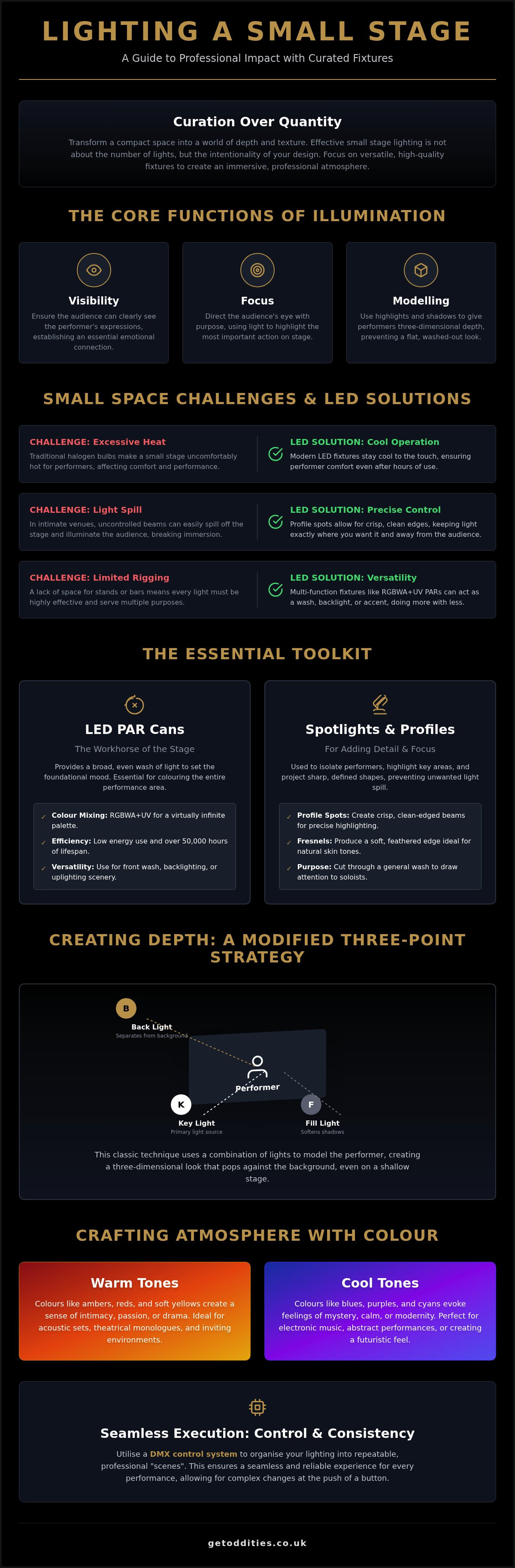
Every successful setup relies on a few Stage lighting fundamentals that govern how we perceive a performance. Visibility is the baseline; if the audience cannot see the performer's expressions, the emotional connection is lost. Focus is equally vital. You want to direct the eye with purpose. In a small space, a single spotlight can instantly tell the audience where the most important action is occurring. Finally, modelling involves using highlights and shadows to give performers three-dimensional depth. Without proper modelling, a performer can look flat and washed out against the back wall.
Challenges of Lighting Compact Spaces
Small stages present unique hurdles that require a thoughtful approach. Managing heat is a primary concern. Traditional halogen bulbs can make a tight stage uncomfortably hot for performers, whilst modern LED fixtures stay cool to the touch even after hours of use. Another challenge is light spill. When the front row is only a metre away, you must ensure your beams are tightly controlled so you don't accidentally illuminate the audience instead of the talent. Finally, limited rigging points mean you must choose versatile fixtures that do more with less, maximising impact where space for stands or bars is at a premium.
Selecting Your Toolkit: Essential Fixtures for Compact Stages
Building a professional lighting rig for a compact venue is an exercise in restraint. You don't need a massive inventory to create a world-class look; you simply need the right tools. When mastering how to light a small stage, the secret lies in choosing versatile, high-performance fixtures that can handle multiple roles. Whilst older halogen-based systems were once the industry standard, modern LED fixtures have completely redefined what's possible in tight quarters. They offer a level of control and safety that traditional bulbs simply can't match, allowing for a transformative experience in even the most modest settings.
Choosing the right equipment is about curation rather than quantity. In a small space, every fixture must justify its footprint. It's often better to invest in a few high-quality units that offer superior colour mixing and dimming than to clutter your rigging with dozens of cheaper, less reliable alternatives. This approach not only keeps your stage looking clean and professional but also simplifies your setup and strike times.
The Versatility of LED PAR Cans
LED PAR cans are the undisputed workhorses of the modern small stage. These fixtures provide a broad, even wash of light that sets the foundational tone for your performance. Choosing units with RGBWA+UV colour mixing allows you to create an almost infinite palette, from deep, saturated purples to delicate, natural ambers. Beyond their aesthetic power, these commercial stage lights are incredibly practical. With lifespans often exceeding 50,000 hours and energy consumption significantly lower than traditional models, they reduce both maintenance time and venue running costs.
Adding Sharpness with Spotlights and Profiles
If PAR cans provide the background, spotlights and profiles provide the detail. A profile spot allows you to cut the light into precise shapes, highlighting a solo performer with crisp, clean edges that prevent light from spilling into the front row. For a softer touch, Fresnels are invaluable. They produce a gentle, feathered edge that blends beautifully with other lights, making them ideal for natural-looking skin tones. When selecting these fixtures, pay close attention to the beam angle. In a small venue, a wider beam might be necessary to cover the stage from a short distance, whereas a narrow beam is perfect for dramatic, high-contrast moments.
Ultimately, three well-placed, high-quality lights will always outperform ten poorly positioned ones. By focusing on a curated selection of LED fixtures, you ensure your stage feels deliberate and professional. This intentionality creates an environment where every beam serves a purpose, elevating the performance from a simple show to a captivating visual narrative.
The Art of Placement: Creating Depth on a Limited Stage
Strategic positioning acts as a visual architect. In a compact venue, the physical distance between the performer and the back wall is often minimal, which can lead to a flat, two-dimensional appearance. Mastering how to light a small stage requires a shift in perspective; you aren't just illuminating a person, you're carving out a three-dimensional environment. By placing your fixtures with intentionality, you can create the illusion of a much larger, more professional performance area whilst maintaining the intimacy that makes small venues so special.
Side lighting is an frequently overlooked technique that adds incredible texture to a performance. By positioning lights at the edges of the stage, you highlight the silhouette and movement of the performers, which is particularly effective for dance or physical theatre. This lateral light catches the contours of the body, providing a sense of weight and presence that front-on lighting simply cannot achieve. It's about creating contrast; the interplay between light and shadow is what gives a small stage its professional polish.
The Three-Point Lighting Method
The classic three-point system remains the gold standard, even when adapted for restricted environments. The Key Light serves as your primary source, typically positioned at a 45-degree angle to the performer to provide clear, dominant illumination. To prevent this from creating harsh, distracting shadows, a Fill Light is placed on the opposite side. This second light is softer and less intense, gently lifting the shadows to ensure the performer remains approachable and clear. Finally, the Back Light is your secret weapon. Positioned behind the performer, it creates a subtle "halo" or rim of light around the head and shoulders. This tiny detail is what separates the talent from the background, preventing them from "disappearing" into the back wall.
Maximising Vertical and Horizontal Space
When horizontal space is at a premium, look to your vertical planes. Floor-mounted uplighting is a transformative tool for small stages. By placing compact LED fixtures on the floor and aiming them upwards at the back wall or scenery, you create dramatic shadows and a sense of architectural scale. This technique draws the eye upwards, making low-ceiling venues feel more expansive. It's also vital to mount your overhead fixtures at varying heights. A uniform line of lights can feel clinical; varying the heights adds a layer of visual interest that suggests a much more complex rig. Always be mindful of your angles in intimate settings. Steeper angles help avoid blinding the audience in the front row, ensuring their experience is as comfortable as it is visually captivating.
Crafting the Atmosphere: Colour Theory and Visual Narrative
Colour possesses the unique power to redefine a room in a single heartbeat. Whilst placement and fixtures provide the structure, colour provides the soul. When you are mastering how to light a small stage, you aren't just making things visible; you're using a sensory language to guide the audience's emotions. Every hue carries a psychological weight that can either heighten the tension of a dramatic monologue or wrap an acoustic performer in a warm, welcoming embrace. Understanding the nuances of this visual narrative ensures your venue feels purposeful rather than accidental.
The concept of colour temperature is your most versatile asset. Moving from the clinical, sharp feel of cool blues to the comforting glow of amber can make a small venue feel like a grand theatre or an intimate living room. Professional lighting design relies on the intentional use of complementary colours, such as amber and teal, to create a vibrant look that feels "expensive" and cinematic. This contrast prevents the stage from looking monochromatic and ensures the performer stands out with clarity and purpose. By learning how to light a small stage with these advanced palettes, you elevate the entire production value of your space.
Setting the Mood with Colour Palettes
Your choice of palette should reflect the heart of the performance. Warm tones, such as soft golds and ambers, are perfect for creating a sense of intimacy and comfort, making them the ideal choice for folk music or spoken word. Conversely, cool tones like cyan and deep blue evoke mystery or a high-energy, modern atmosphere. For moments of maximum dramatic impact, saturated colours like deep magentas or blood reds can be used sparingly to punctuate a climax. The key is intentionality; every colour should serve the story being told on stage.
Layering Colours for Visual Interest
Creating a professional look often involves layering different hues to add visual complexity. A classic technique is to use a warm front wash for natural skin tones whilst employing a cool back light to create a cinematic "rim" around the performer. This interplay of temperatures adds a professional polish that makes the environment feel curated. You can also use patterns or textures to break up flat colour washes, adding a sense of depth to the back wall. To keep your audience engaged, transition your colours between acts or songs to signal a shift in the narrative. To achieve these sophisticated effects, you can browse our curated collection of LED fixtures designed specifically for professional stage environments.
Seamless Execution: Control Systems and Safety Essentials
The final step in mastering how to light a small stage is ensuring the system is as reliable as it is beautiful. A common mistake is purchasing random individual pieces that don't communicate effectively, leading to a fragmented and frustrating setup. True professional results come from a curated collection where every fixture, cable, and controller is designed to work in harmony. This intentionality allows you to focus on the creative performance rather than wrestling with technical glitches or mismatched protocols.
Control systems are the brain of your rig, allowing you to organise your vision into repeatable, professional "scenes". Whilst some suggest that DMX is overly complex for small venues, modern technology has made it more accessible than ever. By daisy-chaining your fixtures with DMX cables, you gain centralised control over every colour shift and intensity change, ensuring your transitions are fluid and deliberate. This methodical approach ensures that your stage looks "designed" rather than simply "on".
Simplifying Stage Control
Choosing the right control method depends on your venue's specific needs. Hardware DMX desks offer a tactile, hands-on experience that many technicians prefer for live, physical adjustments during a show. Alternatively, software-based systems provide a visual interface that makes it easy to program "Static Scenes" for consistent looks or "Chases" for dynamic, moving sequences. If your venue has limited space for cabling, wireless DMX solutions offer a clean and convenient alternative, allowing you to transmit signals across the room without a single wire touching the floor.
Rigging and Electrical Safety
Safety is non-negotiable in any public space, especially when equipment is mounted overhead. Every fixture must be secured with a secondary safety bond or wire to prevent accidents in the event of a primary mount failure. It's also vital to calculate your total power draw. Whilst LED fixtures are incredibly energy-efficient, you still need to ensure your total load doesn't exceed the capacity of standard UK electrical circuits, which typically handle 13 amps per socket. Professional reliability is about more than just the light itself; it's about the peace of mind that comes from a secure, well-managed installation.
Ready to elevate your performance space with professional equipment? Explore our curated commercial stage lighting to start your transformation. By choosing high-quality, reliable gear, you ensure that your journey in learning how to light a small stage ends with an environment that is safe, efficient, and truly extraordinary.
Transform Your Space with Intentional Design
Mastering the nuances of how to light a small stage is a journey from simple visibility to true atmospheric transformation. You've discovered that professional results don't require an endless inventory; they demand a curated selection of energy-efficient LED fixtures placed with architectural precision. By layering colours and adapting the three-point lighting system, you can turn the most restricted corner into a three-dimensional environment that captivates every audience member. Curation is your greatest asset.
Oddities provides the professional-grade LED fixtures you need to realise this vision, expertly curated for maximum impact in intimate venues. With our UK-wide delivery and duties included, accessing high-quality equipment has never been more straightforward. Whether you're highlighting a solo artist or setting the mood for a complex production, the right tools ensure your vision is executed with absolute reliability. Elevate your performance with Oddities’ curated stage lighting and watch as your venue evolves from a simple platform into an extraordinary environment. Your audience is waiting for the lights to go up; make sure they see something unforgettable.
Frequently Asked Questions
What are the best types of lights for a small stage with low ceilings?
LED PAR cans with wide beam angles are ideal for venues with restricted height. They provide broad, even coverage from a short distance without the dangerous heat buildup associated with traditional lamps. Their compact, low-profile design ensures they stay out of the performer's way whilst still delivering a professional wash. This makes them a safer, more practical choice for venues where rigging height is at a premium.
Do I need a professional lighting desk for a small venue setup?
You don't necessarily need a high-end hardware desk for an intimate setup. Many smaller venues successfully use software-based DMX controllers that run from a laptop or tablet. These systems allow you to program repeatable scenes and transitions with ease. If you prefer a tactile feel, a simple hardware console is often more than enough to manage a curated rig effectively without the need for complex training.
How many lights do I actually need for a stage that is 4 metres wide?
A four-metre stage typically requires between four and six well-placed fixtures to look professional. Two lights should provide a front wash for visibility, whilst another two act as backlights to create depth. If you have extra capacity, adding two side lights or a dedicated spot for the centre stage can elevate the look from functional to truly atmospheric without cluttering the rigging space.
Is LED lighting better than traditional halogen for small theatre spaces?
LED fixtures are significantly better for small spaces because they stay cool and are roughly 60% more energy-efficient than older models. Traditional halogen bulbs generate intense heat that can be unbearable for performers in tight quarters. Additionally, LEDs offer built-in colour mixing, whereas halogens require physical gels that can fade. It's a more sustainable, versatile, and safer investment for any compact theatre environment.
How do I prevent stage lights from blinding the audience in a small room?
Preventing audience glare is a matter of steep angles and precise beam control. Aim your fixtures at an angle of 45 degrees or steeper to ensure the light hits the performer rather than the front row. You can also use barn doors or profile shutters to "cut" the light away from the audience area, keeping the focus strictly on the stage and ensuring a comfortable experience for your guests.
Can I run a full stage lighting rig from a standard UK plug socket?
You can certainly run a full LED rig from a single 13-amp UK socket. Modern LED stage lights are incredibly efficient, often drawing less than 100 watts each. This means you could run over twenty fixtures from one outlet without overloading the circuit. It's always best to calculate your total wattage first, but for most small setups, power draw is rarely an issue when using modern LED technology.
What is the difference between a wash light and a par can?
A "wash" refers to a broad, soft-edged pool of light that covers a large area, whilst a "PAR can" is the physical fixture often used to create it. Think of the wash as the visual effect and the PAR can as the tool. Modern LED PARs are specifically designed to provide a smooth, even wash across the stage, making them the foundational element of any professional lighting design.
How do I create a professional look on a very tight budget?
Achieving a professional look on a budget is about mastering how to light a small stage through intentionality rather than volume. Instead of buying many low-quality lights, invest in two or three high-performance LED units with excellent colour mixing. Focusing on backlighting and side lighting creates a sense of depth that makes a setup look far more expensive, proving that careful curation always beats sheer quantity.